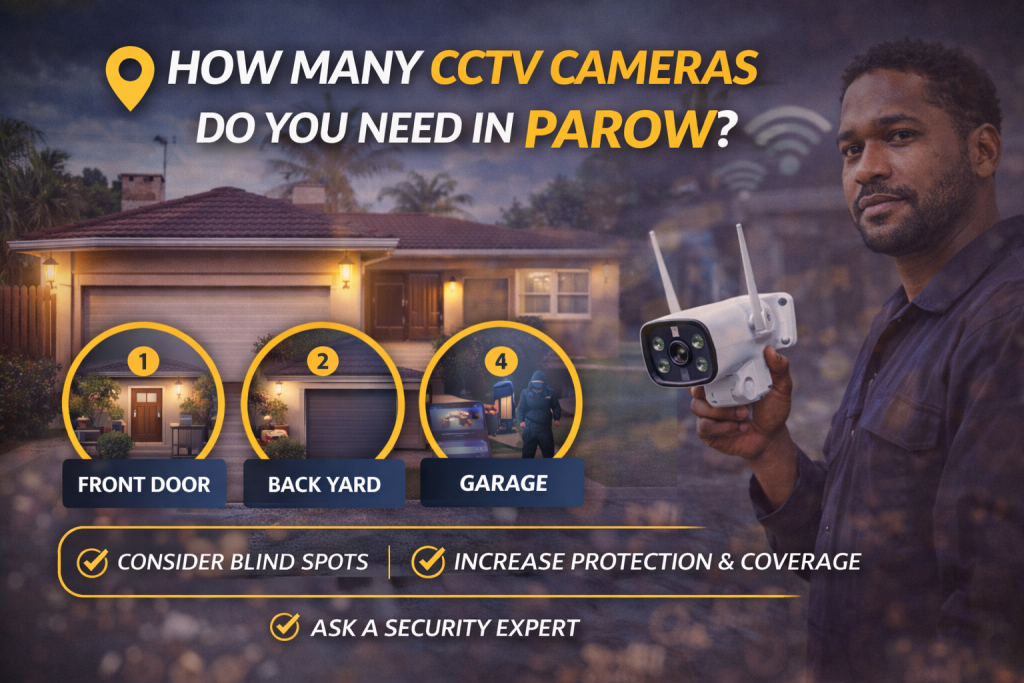
How Many CCTV Cameras Do You Need in Parow?
Choosing the right number of CCTV cameras is one of the most important decisions when securing a property. Too few cameras can leave blind spots, while too many can increase cost without improving coverage. The key is understanding your property layout, access points, and how people move through the space.
Why the Number of CCTV Cameras Matters
Many property owners assume that installing more cameras automatically improves security. In reality, camera placement and coverage matter far more than quantity. A poorly planned system with many cameras can still miss critical areas, while a smaller system that is strategically installed can deliver far better results.
The goal is to eliminate blind spots and ensure that key areas are clearly visible at all times. This includes entrances, movement paths, and any location where someone could access the property without being seen. A balanced approach ensures proper coverage without unnecessary equipment costs.
Key Areas That Always Need CCTV Coverage
Before deciding on the number of cameras, you need to identify high-risk and high-traffic areas. These zones should always be prioritised because they provide the most useful footage when incidents occur.
- Main entrance: Captures everyone entering and exiting the property
- Driveway or parking area: Monitors vehicles and movement
- Gates and access points: Tracks entry and exit activity
- Side passages: Common blind spots where intruders may move unseen
- Backyard or rear access: Often less visible but equally important
For a full breakdown of placement strategy, see our best places to install CCTV cameras guide.
Typical Camera Setup for Homes in Parow
Residential properties in Parow vary in size and layout, which directly affects how many cameras are needed. However, there are common patterns that help guide most installations.
Small homes or townhouses
Smaller properties usually require between 2 and 4 cameras. These setups focus on covering the front entrance, driveway, and one additional vulnerable area such as a side passage. Even with fewer cameras, proper positioning ensures that no key access points are left unmonitored.
Medium-sized homes
A standard home typically needs 4 to 6 cameras. This allows coverage of both sides of the property, the front and rear areas, and any additional outdoor spaces. At this level, the goal is to create full perimeter awareness rather than isolated camera views.
Larger properties
Larger homes may require 6 to 8 cameras or more. Multiple entrances, garages, and extended yard space increase the need for broader coverage. In these cases, camera placement becomes even more important to avoid overlapping views while still covering all areas effectively.
Explore full system options on our home CCTV systems in Parow page.
Typical Camera Setup for Businesses
Business properties usually require more cameras due to increased movement and operational needs. Unlike homes, businesses often need to monitor both public and restricted areas.
- Small offices or shops: 4 to 8 cameras covering entrances and main areas
- Retail stores: 6 to 12 cameras including tills and customer zones
- Warehouses: 8+ cameras for large spaces, stock, and loading areas
Business CCTV systems must also consider internal monitoring for safety, theft prevention, and operational visibility. Learn more about commercial CCTV installation in Parow.
Common Mistakes When Choosing Camera Quantity
One common mistake is focusing only on the number of cameras instead of their placement. Cameras that are installed too high or too wide often produce poor detail, making footage less useful when needed. Another mistake is ignoring blind spots such as side passages or rear access points.
Some property owners also underestimate indoor coverage. In business environments, areas like tills, entrances, and stock rooms are critical and should not be overlooked. A complete system should balance both indoor and outdoor coverage.
How to Get the Right Camera Setup
The most effective way to determine how many cameras you need is through a proper site assessment. This allows a CCTV installer to evaluate your property layout, identify risk areas, and recommend a system that provides full coverage without unnecessary costs.
Camera angles, lighting conditions, and recording requirements all influence the final setup. A well-designed system ensures that footage is clear, reliable, and easy to access when needed.
Need Help Planning Your CCTV System?
If you are unsure about the number of cameras your property requires, getting professional advice can save time and money. A properly planned system delivers better protection and long-term reliability.
Get CCTV Advice in Parow
Speak to a local expert for a camera layout that suits your property and security needs.
For professional CCTV installation in Parow, contact a trusted local installer for expert advice and a tailored system.
Advanced CCTV Planning Tips Most Property Owners Overlook
Many CCTV systems fail to deliver proper results not because of poor equipment, but because of poor planning. Understanding how cameras actually perform in real-world conditions can make a major difference in how effective your system is. Simply placing cameras in visible positions is not enough. The goal should always be to capture clear, usable footage that helps identify people, vehicles, and activity around your property.
Camera Height and Angle Make a Huge Difference
One of the most common mistakes is mounting cameras too high. While higher placement may seem safer, it often results in poor facial recognition because the camera captures the top of a person’s head instead of their face. A better approach is to position cameras at a height that balances visibility and protection. Angles should also be adjusted so that the camera captures movement toward the lens rather than across it, as this produces clearer identification footage.
Lighting Conditions Affect Camera Performance
Lighting plays a critical role in CCTV performance, especially at night. Cameras placed facing direct sunlight or bright lights can produce glare, while poorly lit areas may reduce image clarity. Night vision cameras help, but placement is still important. Avoid positioning cameras directly facing bright lights, and ensure key areas have enough ambient lighting for better results.
Avoiding Blind Spots Between Cameras
Even properties with multiple cameras can still have blind spots. This often happens when cameras are spaced too far apart or aimed incorrectly. Each camera should slightly overlap with the next coverage area to ensure there are no gaps. This is especially important in side passages, entrances, and corners of buildings where movement can go unnoticed.
Choosing Between Wide-Angle and Focused Cameras
Wide-angle cameras cover larger areas but sacrifice detail, while more focused cameras provide better identification but cover less space. A balanced system often uses both. For example, wide-angle cameras may monitor general areas, while focused cameras cover entrances and key points where identification is critical.
How Property Layout Affects Camera Quantity
The design of your property has a direct impact on how many cameras you need. Two homes with the same size can require completely different setups depending on layout, walls, entrances, and outdoor space.
Open vs Complex Layouts
Open properties with fewer obstructions may require fewer cameras because each unit can cover more area. However, properties with multiple walls, corners, or separate sections often need additional cameras to maintain full visibility. Complex layouts naturally create more blind spots that need to be addressed.
Single-Story vs Double-Story Homes
Double-story homes often require more strategic camera placement. Elevated views can help cover larger areas, but additional cameras may still be needed to monitor ground-level access points effectively. Balancing coverage between floors ensures no critical areas are missed.
Corner Properties and Large Yards
Corner properties or homes with large yards usually require more cameras due to increased exposure. Multiple entry points and wider boundaries mean more coverage is needed to maintain consistent visibility across the entire property.
Future-Proofing Your CCTV System
A well-planned CCTV system should not only meet your current needs but also allow for future expansion. Many property owners start with a basic setup and later realise they need additional cameras or better coverage.
Leaving Room for Additional Cameras
When installing a system, it is often a good idea to choose a recorder that supports more cameras than you currently need. This allows you to expand your system later without replacing the entire setup. Planning for future growth can save both time and money.
Upgrading Camera Quality Over Time
Technology improves quickly, and newer cameras often provide better image quality and features. Starting with a solid system gives you the option to upgrade specific cameras later without rebuilding the entire system. This approach keeps your security setup modern and effective.
Maintaining System Performance
Regular maintenance is essential for long-term performance. Cameras may become dirty, cables can wear over time, and recording devices may need updates or servicing. Keeping your system in good condition ensures that it continues to perform when you need it most.
Final Thoughts on Choosing the Right Number of Cameras
The right number of CCTV cameras depends on careful planning rather than guesswork. Instead of focusing only on quantity, it is more important to ensure that every critical area is covered properly. A smaller, well-designed system will always outperform a larger system with poor placement.
By understanding your property layout, identifying key risk areas, and planning camera positions correctly, you can build a CCTV system that provides reliable protection and clear, usable footage. Taking the time to plan properly from the start will always deliver better long-term results.